Barter Collaboration Meaning: What It Is & How It Works
Posted on 7 August 2026
What Is Barter Collaboration?
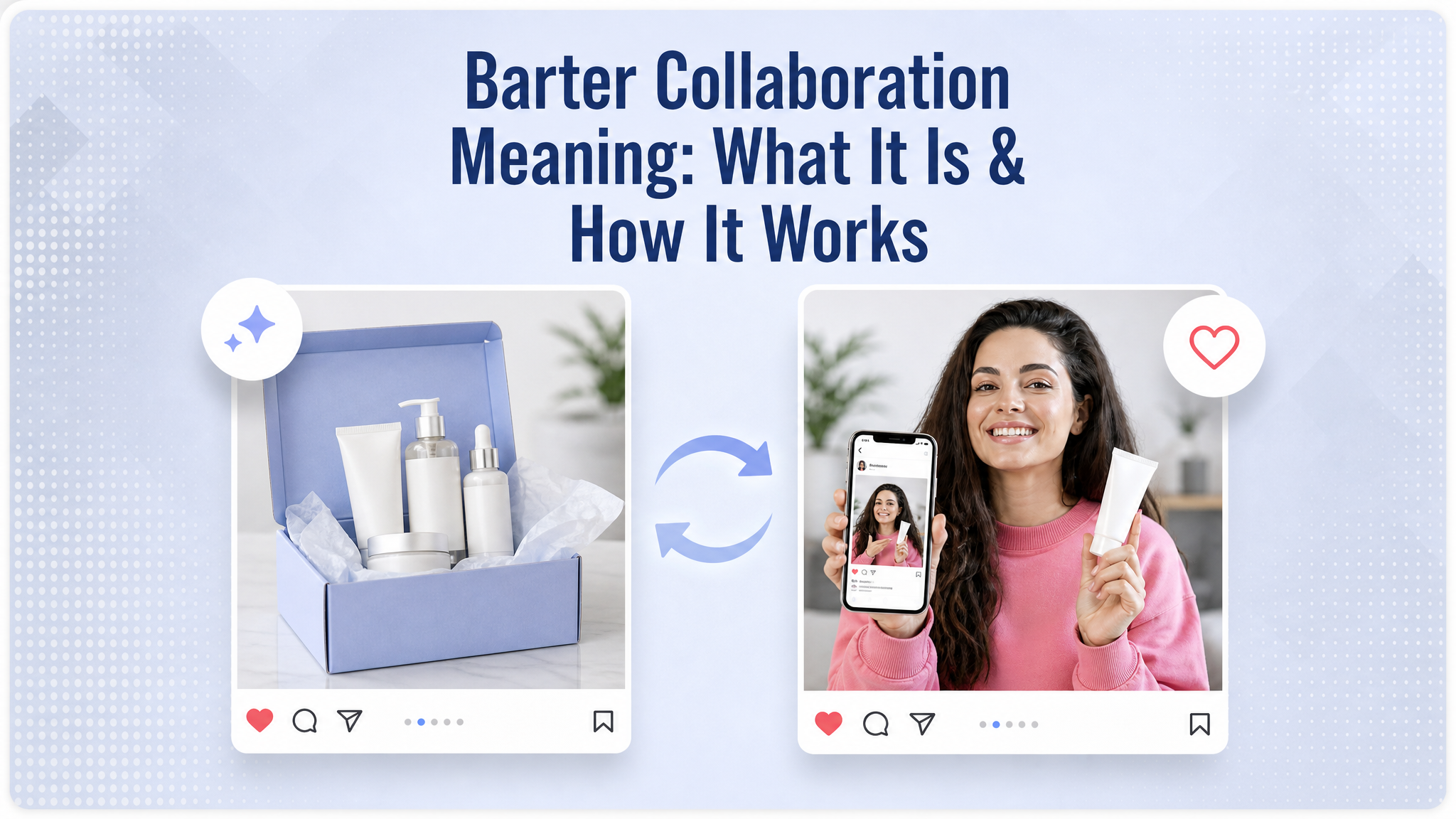
Barter collaboration is a marketing arrangement where a brand provides free products or services to a content creator or influencer in exchange for content — posts, reels, reviews — instead of a cash fee. The "payment" is the product itself, agreed upfront to be worth roughly what the deliverables are worth.
That's the barter collaboration meaning in the simplest terms — but the mechanics of a real barter deal are more specific than most definitions let on. A skincare brand doesn't just mail a box and hope for the best — it agrees with the creator on what's being sent (a single product, a bundle, a service credit), what content comes back (one Reel, three Stories, a written review), and who owns the footage afterward. None of that is implied by the word "barter" alone; it's negotiated the same way a paid brief would be, just without an invoice attached.
This kind of product-for-content deal differs from paid influencer marketing, where cash changes hands (sometimes alongside product) in return for reach and deliverables. It's also different from organic user-generated content, which happens unprompted — a customer posts about a product they bought themselves, with no agreement, no brief, and no expectation from the brand. Barter collaboration sits in between: it's a negotiated exchange, initiated by the brand or the creator, with terms both sides agree to before anything is shipped.
How Does Barter Collaboration Work?
A barter arrangement generally moves through the same four stages, regardless of industry:
- The brand identifies the right creators. This isn't random outreach — brands look for creators whose audience and niche genuinely overlap with the product, since a mismatched creator produces content that doesn't convert even if it gets posted.
- The brand sends product or service of an agreed value. The value is meant to roughly match what the deliverables would cost if paid for in cash — a modest single product justifying one Reel looks very different from that same product being expected to cover five separate pieces of content.
- The creator produces the agreed content. This includes the specific deliverables (how many posts, what format), usage rights (can the brand repost or run ads with the footage), and a timeline for posting.
- The content goes live and/or is handed to the brand. Depending on the agreement, the creator posts to their own channel, hands over raw files for the brand's use, or both.
Even without cash on the table, these terms are typically locked in through a brief or a short contract before product ships — exclusivity, number of posts, and usage rights aren't left to good faith. For brands wanting more detail on how each of these stages actually plays out end to end, this step-by-step barter collaboration process breaks the workflow down further.
Barter Collaboration vs Paid Influencer Marketing
The two models get lumped together constantly, but they solve different problems.
| Barter Collaboration | Paid Influencer Marketing | |
|---|---|---|
| Compensation | Product or service only (occasionally + small cash) | Cash fee, sometimes plus product |
| Typical creator size | Micro/nano creators, smaller engaged audiences | Larger audiences, professional/managed creators |
| Best suited for | New brands, limited budgets, testing many creators | Guaranteed reach, established campaigns |
| Negotiation weight | Lower — product value sets the ceiling | Higher — rate cards, usage terms, exclusivity clauses |
Barter promotion tends to work best with micro and nano creators who are motivated by trying a product they'd genuinely use, not by a paycheck. Paid deals make more sense once a brand needs a guaranteed audience size or a creator whose time is professionally booked. In practice, most brands running an ongoing content program blend both — barter for volume and testing, paid for a smaller number of high-reach partnerships.
Why Do Brands Use Barter Collaborations?
The appeal isn't just "it's free." A few concrete reasons show up repeatedly:
- Lower or no cash cost makes it accessible to brands without a paid influencer budget, particularly early-stage D2C brands.
- Authentic content and social proof — creators genuinely trying a product tend to produce content that reads less like an ad, which matters for trust-driven categories like beauty, food, and apparel.
- Cheap volume testing. Because the cost per creator is low, brands can run barter collaborations with far more creators than they could afford to pay in cash, then see which content and creators actually perform before investing more.
- Reusable UGC assets. Content produced through barter collaboration doesn't just live on the creator's page — with the right usage rights agreed upfront, it becomes ad creative, website content, and product page imagery the brand keeps using long after the original post.
For a look at how this plays out at scale, this breakdown of real barter marketing campaign results shows what brands actually got back from running these programs.
Is Barter Collaboration Right for Your Brand?
Barter collaboration works best for product-based brands — D2C, beauty, food, and apparel — where there's a tangible item creators genuinely want to receive and can showcase on camera. It's a much weaker fit for high-ticket or service-based businesses, where a free product doesn't come close to covering what a piece of content is worth, or for brands that need guaranteed reach from a specific creator tier rather than a volume of smaller creators.
If your product fits the model and you're ready to move from understanding the concept to actually running one, you can join our barter collaboration program to get matched with creators and set up your first exchange. For brands that want a managed version of this end to end, our barter collaboration agency in India handles the creator sourcing, briefs, and usage rights on your behalf.
Frequently Asked Questions About Barter Collaboration
Is barter collaboration free?
It's free of cash cost for the creator's fee, but not free overall — the brand still pays for the product or service shipped, plus any shipping and admin time. The "cost" is absorbed into product/inventory rather than a marketing invoice, which is why it's attractive to brands without a dedicated influencer budget.
Do creators get paid in barter deals?
Creators are compensated with the product or service itself rather than cash. Some agreements add a small cash fee on top of product, especially as a creator's following grows, but a pure barter deal means the product is the entire compensation for the content produced.
What's a fair product value for a barter deal?
A fair value roughly matches what the deliverables would cost if paid for in cash — a lower-cost single item might suit one Reel, while multiple posts or usage rights for ads typically call for a higher-value product or a small bundle. Brands and creators should agree on this before shipping, not after.
Can barter collaborations include cash plus product?
Yes — hybrid deals are common, especially with creators who have larger or more engaged audiences than a pure barter arrangement typically attracts. A brand might send the product plus a modest cash fee to secure a specific deliverable or usage right that product alone wouldn't cover.