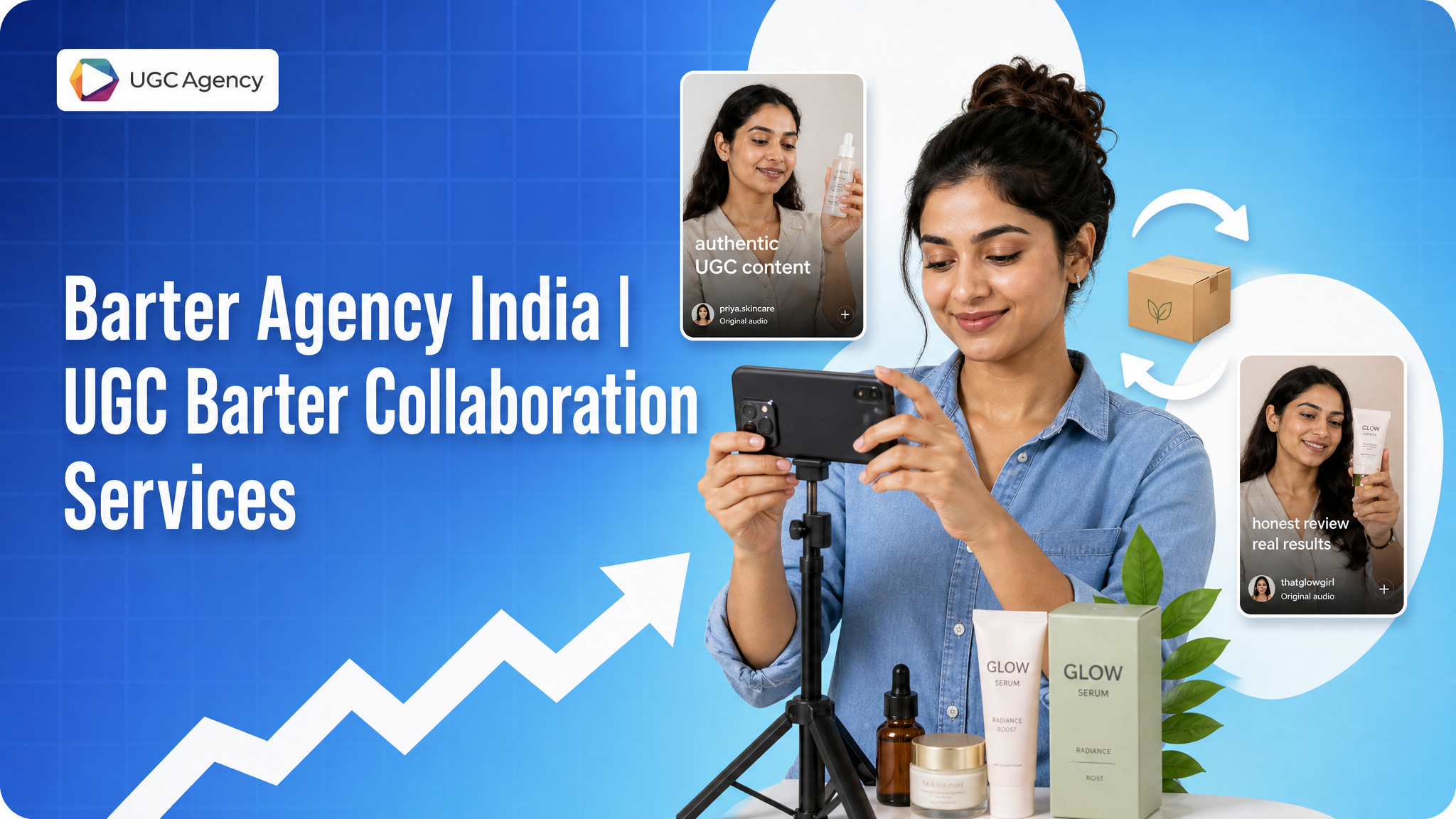
This guide walks through how the barter process actually runs — which industries get the most value from it, and what to expect at each step of a managed campaign. For the full picture of our barter program (pricing context, results, and how to get started), see our barter collaboration agency page; this guide is the supporting deep-dive on process.
A barter deal, in the Indian UGC and influencer context, is simple: a brand sends a creator free product (or occasionally a service) in exchange for content — photos, videos, reels, or reviews — instead of paying a cash fee. No invoice, no negotiation over rates, just an exchange of value that works for both sides.
Brands lean on barter collaborations because they're budget-friendly, especially for early-stage or D2C brands that need a steady stream of authentic content without a large media spend. Creators take barter deals because it's low-friction — they get product they'd likely buy anyway, plus content for their own feed. And because there's no invoicing or lengthy rate negotiation involved, barter campaigns typically turn around faster than paid influencer deals. That combination — lower cost, genuine content, quicker execution — is exactly why a dedicated barter agency in India exists: someone has to source the right creators, manage the logistics, and make sure the content actually gets delivered and approved.
Running barter deals at scale isn't as simple as DMing a few creators and mailing out products. As a UGC agency in India, our job is to handle every part of that process so brands don't have to chase creators, negotiate usage rights themselves, or deal with product that never gets used.
That means sourcing creators who are genuinely open to barter arrangements (not every creator is, especially past a certain follower count), negotiating what's expected in return for the product, coordinating shipment so nothing gets lost in transit, and reviewing the content before it goes live to make sure it matches the brief. This is the specific service this page exists to make discoverable — a structured, managed alternative to trying to run barter outreach in-house.
Matched by niche, audience demographics, and engagement quality, not just follower count.
Clear expectations set upfront on deliverables, timelines, and content usage.
Shipment tracking and follow-up so product actually reaches the creator and gets used.
So the brand can repost, run ads against, or otherwise reuse the content without a separate negotiation later.
Visibility into what the content delivered, so barter spend can be measured against results.
We treat this process as the actual evaluation criteria a brand should use when vetting any barter agency in India — not just how we describe our own service, but the standard a brand should hold any vendor to. A brief goes in, creators get matched by niche and audience fit, product goes out, content comes back for review, usage rights get granted, and results get tracked. Every step has a clear owner and a clear output, which is what keeps barter campaigns from stalling out at the "we sent product and never heard back" stage — a common failure point when brands try to run this themselves.
If you want a closer look at what goes into the content stage itself, our guide on how to create UGC content covers the creative side of this process in more depth.
Barter works best in product-led categories where the item itself is the incentive — where a creator genuinely wants the product regardless of payment. These categories consistently see the strongest results because the economics favor both sides: the product has real perceived value, and it's easy for a creator to build content around actually using it.
Real perceived product value makes it easy for creators to build content around genuine use.
The economics favor both sides, since the product itself is easy to build genuine-use content around.
Strong barter economics — real perceived value and content that's easy to build around actual use.
Product demonstrations translate naturally into content, extending the barter model into everyday categories.
This isn't theoretical — it's reflected in the work we've already done. Organic India's UGC campaign shows how a herbal/wellness brand used creator-led content to build trust in a category where authenticity matters more than polish. Shoppers Beauty's skincare UGC campaign is a similarly strong example in beauty, another category where barter economics work well because the product itself does a lot of the selling. Our work with Neolayr further shows the model extending into lifestyle and home categories, where product demonstrations translate naturally into content.
If your brand sits in one of these categories, barter is usually the more efficient starting point before moving to paid collaborations.
Generic influencer marketplaces will hand you a list of creators and leave the negotiating, vetting, and follow-up to you. DIY outreach means chasing creators over email or DM, often with no leverage if content doesn't materialize.
We built this agency specifically to close that gap — a vetted creator network that's already screened for barter willingness, faster turnaround because matching and logistics are handled in-house, and transparent reporting so you're not guessing whether the campaign delivered.
This guide is part of a deliberately interlinked barter content cluster — this process breakdown, our barter collaboration agency page, and our case studies all point back to each other so the full picture is easy to find, for you and for search engines. That's not a cosmetic detail — it's evidence of a mature, technically sound operation rather than a one-off freelancer setup. You can see our UGC campaign results or learn more about our UGC agency team if you want the fuller picture before reaching out.
Yes, particularly for early and growth-stage brands. Creators — especially nano and micro creators — remain open to barter deals when the product genuinely fits their content, and brands get authentic content at a fraction of paid-collaboration cost. It works best as part of a broader content strategy rather than the only lever you pull.
There's no cash changing hands, so "value" is set by product cost, the scope of content requested, and the creator's typical rates. A creator who'd normally charge for a single reel might accept a product worth roughly that value in exchange for equivalent content — we negotiate this on a case-by-case basis.
Yes, and it often should be. Many brands start relationships with a barter deal to test fit, then move top-performing creators onto paid contracts for larger campaigns or usage rights that go beyond the creator's own channels.
Most barter campaigns run four to six weeks from brief submission to published content, accounting for creator matching, product shipping time, and content review. Timelines can compress if creators already have product on hand or extend for categories with longer usage cycles, like skincare.
Yes. We work with brands based outside India that want UGC content aimed at the Indian market, as well as NRI-founded brands entering India. Product logistics take a bit more planning for international shipments, but the process itself doesn't change.
If barter collaboration sounds like the right fit for where your brand is right now, head over to our barter collaboration agency page to see pricing context, results, and how to start a brief. If you also need polished video assets alongside creator-sourced content, our video production services in India can run alongside a barter campaign rather than replace it.
Take a look at the case studies linked above first if you want proof before you commit — then let's build a barter campaign that actually delivers content you can use.